Treatments
Filler in Korea
Lip, Nose and Chin Filler in Seoul — Price, Before and After, Days to Stay
Written by BeautyCoordi Editorial TeamMedically reviewed by  Dr. Park HwonhamDR.BAQUO19 min read

Contents · 12
- 01Lip, nose and chin filler in Korea: which area fits?
- 02Planning filler in Seoul: days, flights and records
- 03Korean filler before and after: clinic case photos
- 04Filler price in Korea: what decides the cost
- 05How to choose a filler clinic in Korea: a checklist
- 06Filler gone wrong? Side effects and warning signs
- 07Filler dissolver (hyaluronidase): swelling, timing and limits
- 08How long does filler last?
- 09Under eye filler in Korea: the short version
- 10What filler is: dermal fillers vs botox and Juvelook
- 11Aftercare
- 12FAQ
If you are planning filler in Korea from abroad, the first decision is not which clinic or which brand — it is which area really needs filler, and how much. Lips, nose and chin are where people visiting Seoul most often ask about filler; the nasolabial folds, forehead and under eyes follow. Filler itself is a hyaluronic acid (HA) gel injected under the skin that fills a hollow or adds shape by exactly the amount put in, right away — and because the real result only shows once the swelling settles one to two weeks later, the days you stay in Seoul matter as much as the product. In Korea, cosmetic filler is regulated as a class 4 medical device — the highest risk class, and hyaluronic acid filler can be reversed with a dissolving injection (hyaluronidase).
Filler in Korea at a glance
- Which area: lips, nose, chin, nasolabial folds, forehead or under eyes — filler fills hollows and adds shape; lines that appear with expression are mainly botox's job
- Korean style lip filler: volume that is noticeable but looks just slightly plump — start small and top up after the swelling settles
- Days to stay: swelling and bruising usually settle within a few days to one to two weeks; get filler early in the trip, not the day before your flight
- Take home: the product name, the amount (cc) and the areas in writing — the next doctor needs it to top up or dissolve
- Price in Seoul: priced per cc; Korean-made HA about ₩70,000–250,000 per 1cc and imported about ₩250,000–500,000 (market ranges, November 2026)
- If something goes wrong: HA filler can be dissolved (wait at least two weeks before redoing); skin colour change, severe pain or vision problems need help immediately
This guide is for people planning filler on a trip to Seoul: which area fits filler, how to plan the days, case photos and price, how to choose a clinic, then what can go wrong, dissolving and how long it lasts. What filler is, and how it differs from botox and Juvelook, comes after. Under eye filler and dark circles have their own guide: dark circle treatment in Korea.
Lip, nose and chin filler in Korea: which area fits?
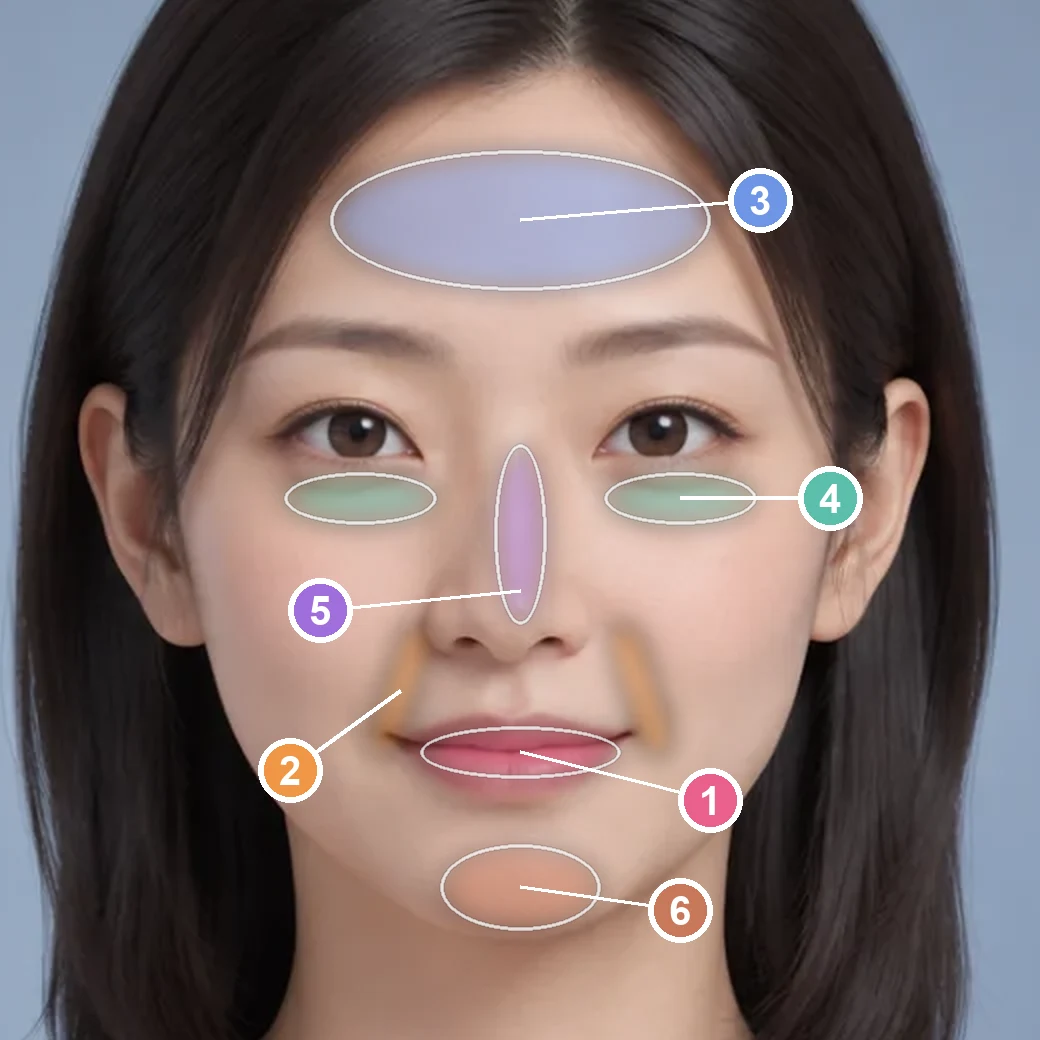
| Area | Mainly changes | Worth knowing |
|---|---|---|
| Lips | volume, outline (lip border), left–right balance | lots of swelling: judge the shape after one to two weeks |
| Nose | adds height to the bridge or tip (non-surgical nose job) | the area with the most reports of vascular occlusion and vision loss |
| Chin | brings a retruded chin forward | judged together with the balance of the side profile |
| Nasolabial folds | fills the groove from beside the nose to the mouth corners | if sagging is the main cause, filler alone has limits |
| Forehead | rounds out a sunken or flat forehead | an area with many reported vascular occlusions |
| Under eyes | fills hollows and the shadow they cast | thin skin: filler placed too shallow can show as a bluish tint |
Hollows and lost volume you can see even with a still face are filler's job; lines that appear when you make an expression are mainly botox's. See the botox guide.
Lip filler in Korea: what "Korean style" natural lips means
Lip filler is one of the treatments people look for most when they search for filler in Korea, often as "Korean style" lips. There is no single standard technique behind that phrase; what most people mean is a natural, slightly fuller result. For that, these are worth checking at the consultation.
- Do not put in a lot at once: studies also worked this way, with a top-up around 30 days after the first treatment if needed. Starting small and adding once the swelling is gone makes the shape easier to control.
- Look at the whole face: the balance between upper and lower lip, the mouth corners, and how the lips relate to the chin and nose. Lips that look beautiful in a photo will not necessarily look natural on your face.
- Aim for "just slightly plump": in practice, many people want volume that is noticeable but not awkward.
- Tell swelling apart from the result: lips swell a lot. In a meta-analysis, swelling occurred in 74.3% and bruising in 39.5%. Do not judge from the first few days.
- Mention lip herpes if you have had it: rarely (0.6%), herpes can flare up again after treatment.
A review of lip filler complication cases found nodules (lumps) were the most common, and filler moving beyond the lip border or showing through as discolouration was also reported.
Not sure how much lip filler would look natural on your face? Ask us before you book your trip.
Ask on WhatsAppNose and chin filler in Korea
- Chin filler: in a randomised study of 140 people with a retruded chin, 81% responded at 12 weeks and 74% at 48 weeks (6% and 11% without treatment). How far to bring the chin forward is judged with the side profile, together with the nose and lips.
- Nose filler: in an analysis of 5,000 non-surgical nose filler treatments, swelling and redness resolved on their own in about half of cases, and there were 2 infections and 3 cases of local skin necrosis. The nose is also the area most often reported in cases of vision loss after filler (see below), so ask which product will be used and how the doctor reduces the risk of injecting into a vessel.
Nasolabial fold filler: when it works, and when it goes wrong
Nasolabial folds form when the front of the cheek hollows out, the cheek sags downward and skin elasticity drops, often together. Filler is good at one part of that: filling the hollow groove.
- Good fit: the groove is sunken and casts a shadow; sagging is not severe
- Do not overfill: filling in a lot to erase folds that formed naturally with age can, over time, make the area look bulky and puffed out. How much to fill is decided after looking at the shape of the fold first.
- Filler alone has limits when: sagging cheeks are the main cause. Then lifting treatments are sometimes considered alongside it — see the Ultherapy and Shurink guide and the thread lift guide.
In a study of 75 people with nasolabial folds, filler was given and then one side was re-treated at 4.5 months and the other at 9 months. Both schedules held the result for up to 18 months, with no difference between them.
Planning filler in Seoul: days, flights and records
Filler shows right away, but the real result shows only once the swelling settles — so plan the trip around that window.
- How many days to stay: swelling, bruising and tenderness usually settle within a few days to one to two weeks; the lips and under eyes swell the most. Avoid booking filler for the day before a long-haul flight or an important event.
- Get it done early in the trip. One to two weeks is when the shape settles and when a lump or asymmetry would show. If your stay allows, early treatment leaves time to go back to the same clinic for a check.
- On the day: clinics commonly advise avoiding a sauna, heavy drinking or hard exercise, so follow the clinic's aftercare.
- Do not plan dissolve-and-refill in one short stay. Wait at least two weeks after dissolving before deciding on a refill.
- Some reactions show after you are home. Delayed inflammatory reactions start at a median of three months. The warning signs below apply wherever you are — see a doctor locally and show them your record.
- What to take home: ask for the product name, the amount (cc) and the areas in writing. Your next doctor — in Seoul or at home — needs it to top up or dissolve safely.
- Language: for foreign patients, the consultation and aftercare are explained through an interpreter, so ask anything you are unsure about before treatment, not after you fly home.
Korean filler before and after: clinic case photos

 Before2 weeks later
The comparison above is an illustration on a 3D model. Real case photos from the reviewing doctor's clinic in Seoul:
- Lip filler before and after in Seoul — case guide
- Lip and mouth-corner filler — case 5, case 4, case 3
- Nose tip filler — profile, side view
- Chin filler
- Nasolabial fold filler
- Forehead filler
These are individual cases. Results differ with the face, the product, the amount and the area, so use them to see what kind of change is possible, not as a promise. When you compare photos, check whether they were taken right after treatment or weeks later, in the same light and angle.
Filler price in Korea: what decides the cost
Typical prices in Seoul
Filler is not covered by Korean health insurance, so there is no official price statistic. The ranges below come from public price lists on Korean price-comparison platforms (Modoodoc, Goodoc, Gangnam Unni) and clinic price pages, checked in November 2026. Event prices are posted clinic by clinic and change often, so that column is the thinnest evidence and is given as a wide range.
| Usual price | Event / first-visit price | |
|---|---|---|
| Korean-made HA filler (e.g. Neuramis, Atierre), 1cc | about ₩70,000–250,000 | often about ₩40,000–100,000 |
| Imported HA filler (e.g. Juvederm, Restylane, Belotero), 1cc | about ₩250,000–500,000 | — |
| Lip filler, 1cc (Gangnam Unni app averages, 2026) | Korean-made about ₩70,000–150,000; imported about ₩300,000–430,000 | — |
- Price is per cc, so the area matters: typical amounts listed by one platform are lips 1–2cc, nose 0.5–1cc, chin 1cc (about 2cc for a retruded chin), nasolabial folds 1–1.5cc, forehead about 3cc and under eyes 1–2cc. The same per-cc price gives a very different total for lips and forehead.
- What moves the price: the product brand (Korean-made or imported), the amount, the doctor's experience, and whether a top-up or a check visit is included. Clinics in busy areas such as Gangnam and Sinsa run many events, so posted prices vary widely even on the same street.
- Check VAT: some prices are listed without the 10% VAT. One platform's survey of 13 clinics (2021, VAT included) averaged ₩323,231 per 1cc of imported filler (₩242,000–418,000).
- Very cheap prices: compare the product name and amount first; a lower total often means less product or a different brand.
Example: one clinic's current prices
Kondae PPEUM Clinic in Seoul (directly connected to exit 1 of Konkuk University station) listed these filler prices on 13 November 2026, in Korean won:
| Treatment (clinic menu name) | Price (KRW) |
|---|---|
| Korean-made HA filler, 1cc (국산필러) — lips, chin, nasolabial folds and other face areas | 150,000 (first-visit / event price 59,000–79,000) |
| Lip filler package (입술필러패키지) | first-visit price 69,000 |
| Korean-made lip filler 1cc + mouth-corner toxin | event price 99,000 |
| Imported lip filler 1cc + imported (German) mouth-corner toxin | event price 269,000 |
| Korean-made chin filler (V-fit), 1cc | event price 39,000 |
| Large-volume filler for wider areas (여백 정리 필러), Korean-made / imported raw material | event price 590,000 / 790,000 |
| Imported ear filler (엘프귀 필러), 1cc / 4cc | 450,000 / 1,190,000 |
| Filler-dissolving injection (hyaluronidase) | 100,000 |
- Nose, forehead and under-eye filler are not listed as separate items; they are quoted by product and cc after the consultation. Prices are per session and exclude anything added on the day.
- Current events: event prices change often. See the latest filler events on the clinic's English price page.
Tell us what matters most to you — value, location, expertise, premium products, language or budget — and we will recommend clinics in Seoul that fit: we collect your request first and match you with several options.
How to choose a filler clinic in Korea: a checklist
There is no official ranking of filler clinics in Korea. Offers for the same "lip filler" or "chin filler" differ between clinics because the conditions differ, so compare clinics on these points instead.
cc (mL) is the amount of filler injected. Filler usually comes in syringes, so it is described as "how many cc". The same 1 cc looks like a big change in a small area such as the lips and a small change in a wide area such as the forehead, so cc alone does not tell you the result.
- Which product — the product name, imported or Korean, and whether it is MFDS-approved. In Korea's MFDS database, Juvederm (AbbVie Korea), Restylane (Galderma Korea) and Neuramis (Medytox) are all approved as class 4 medical devices
- How many cc, and what happens to any leftover
- Whether a sealed, genuine product is opened in front of you
- Whether a top-up is included, and until when
- How dissolving is handled if you dislike the shape or a problem comes up
- Whether you get a written record of the product, amount and areas — the most useful thing to have the next time you get filler or need it dissolved
MFDS also advises getting filler from a doctor experienced in injections and not deciding on impulse.
Filler gone wrong? Side effects and warning signs
No treatment is side-effect free. Reactions reported with filler, from most to least common:
| How often | Reaction | Worth knowing |
|---|---|---|
| Common | swelling, bruising, tenderness, redness | usually settles within a few days to one to two weeks |
| Sometimes | lumps (nodules), asymmetry, a bluish tint | lumps felt after treatment often improve within days to weeks; lasting lumps or shape problems are adjusted with a dissolving injection |
| Later | a red, swollen lump weeks or months later (delayed inflammatory reaction) | about 1 in 2,000 people per year; median onset 3 months |
| Rare | infection, skin necrosis from a blocked vessel, vision loss, stroke | needs treatment immediately |
MFDS lists possible side effects of filler as itching, inflammatory reactions and pain, bruising and swelling, skin necrosis, blindness or reduced vision, leakage of the injected material, movement to unintended areas, and temporary or long-lasting skin nodules.
Vascular occlusion: filler enters a blood vessel or presses on it so blood cannot flow. In a Japanese study of 290,307 hyaluronic acid injections, there were 10 vascular occlusions, 8 of them in the forehead.
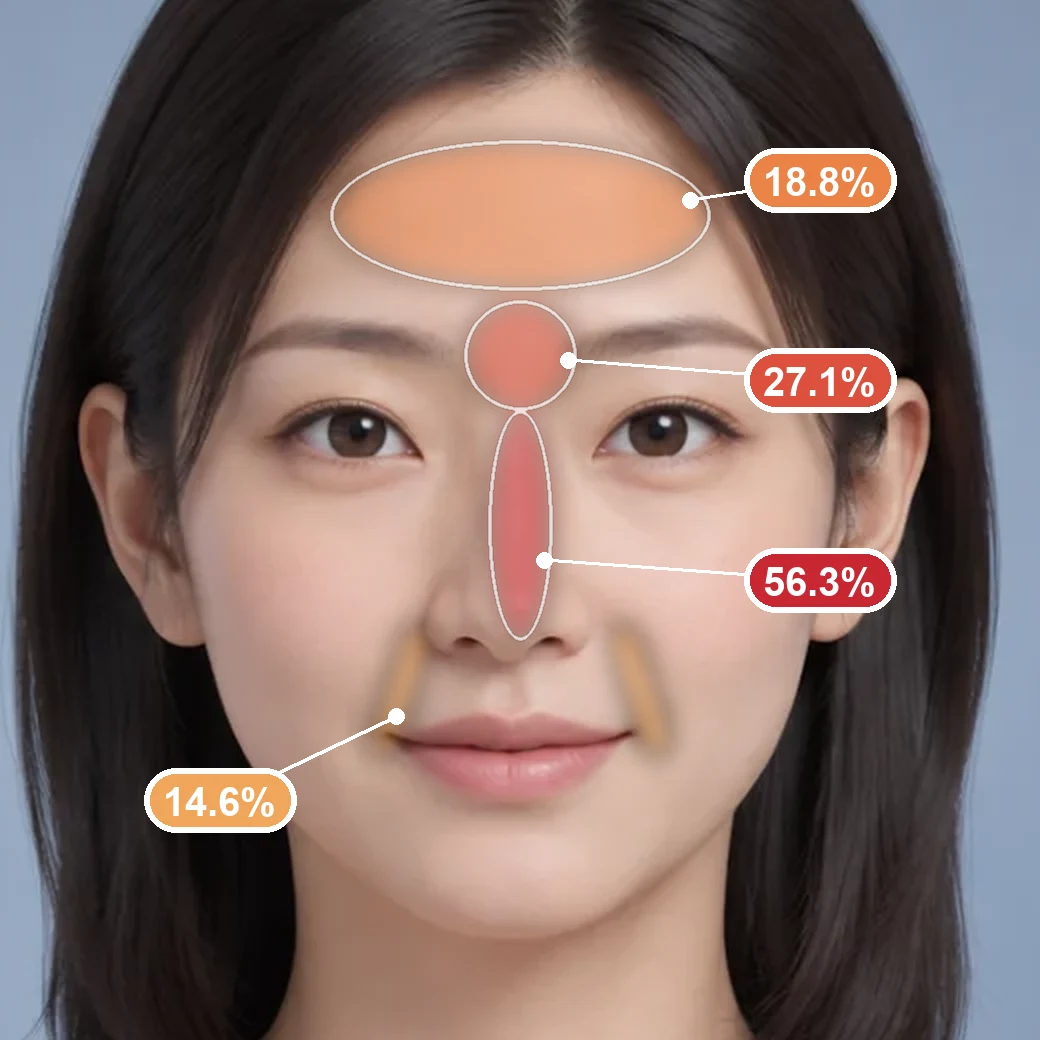
Blindness: extremely rare, but the most serious complication. Among 48 new cases of vision loss reported in 2015–2018, the most common areas were the nose (56.3%), between the brows (27.1%), the forehead (18.8%) and the nasolabial folds (14.6%), and vision fully recovered in only 20.8%. In Korea, a Korean Retina Society survey also reported 44 patients whose eye artery was blocked after filler injection.
Contact the clinic that treated you or go to an emergency room right away — wherever you are — if
- the skin around the injection site turns white, grey or bluish
- you have unusual, severe pain during or soon after treatment
- your vision blurs or you cannot see properly
- your speech slurs, your face, arms or legs feel weak, or you have a severe headache or dizziness
Tell the clinic first if you are pregnant or breastfeeding, have inflammation or lip herpes where the injection would go, take aspirin or blood thinners, have had filler in the same area before (especially non-HA filler), or have allergies or an autoimmune disease — whether and how to treat may change.
Filler dissolver (hyaluronidase): swelling, timing and limits
Hyaluronic acid filler can be dissolved with an enzyme injection called hyaluronidase. It is used not only when you dislike the shape but also to treat complications.
- Non-urgent: a lump you can feel, a bluish tint from filler placed too shallow, or a hypersensitivity reaction are treated with a low or moderate dose.
- Emergency: a blocked vessel or vision problems need a high dose immediately.
- Limits of the evidence: in arm and back skin studies, filler dissolved in proportion to the dose, but there are no randomised studies yet on dissolving facial filler. So the dose and number of sessions are decided by the doctor based on what they see.
The dissolving injection is still an injection, so swelling and bruising can follow at that spot. Which area to dissolve and by how much is decided after an examination.
Do not dissolve and refill straight away. Right after dissolving, swelling and leftover filler make it hard to judge the real state. Waiting at least two weeks before deciding whether — and how much — to refill is the safer path. On a short trip, that usually means dissolving on this visit and deciding on a refill later.
How long does filler last?
| Area | How long the effect held in studies |
|---|---|
| Under eyes | 63.5% at 12 months; 80.3% at 18 months after re-treatment at 12 months |
| Lips | in a meta-analysis, the share improved was 74% at 6 months and 46% at 12 months; in a lip-product study, over 60% held through one year |
| Nasolabial folds | held up to 18 months with one re-treatment (at 4.5 or 9 months) |
| Chin | 81% at 12 weeks, 74% at 48 weeks |
The products and the ways results were measured differ between studies, so the numbers cannot be compared directly from one area to another. Even in the same area, results vary a lot with the product, the amount and depth, and your metabolism.
The visible effect and the filler still being there are not the same thing. In an MRI study of 33 people with filler in the mid-face, filler remained for more than two years in everyone, and was still visible up to 15 years later. If you keep adding more at short intervals because the effect seems to fade, filler can build up — so it helps to know your previous treatment record (product, amount, area) before deciding on the next one.
Under eye filler in Korea: the short version
Under eye filler fills the hollow under the eye and the shadow it casts, so it suits under eyes where a hollow is the main reason for the shadow. Whether filler or fat repositioning fits, prices and the days to stay are covered in the dark circle treatment in Korea guide.
- Before and after: the hollow is filled straight away, but the area is often swollen; compare after one to two weeks. In a randomised study of 333 people with under-eye hollows, 87.4% responded at three months (17.7% in the untreated group) and 63.5% still did at 12 months. Those re-treated at 12 months had an 80.3% response rate at 18 months.
- A bluish tint: the skin here is thin, so filler placed too shallow can show through as a bluish tint. This is commonly called the Tyndall effect (one analysis suggests the optics are actually different, but the name has stuck). It can be corrected with a low or moderate dose of hyaluronidase.
- Migration: if the shape looks puffy or has shifted after it has settled, go back to the clinic rather than adding more.
- The eye area is a cautious zone: in a 2016 safety notice, MFDS asked clinics not to use filler around the eyes, such as between the brows, where the skin is thin and injection into a vessel is more likely. The FDA (as of July 2023) also lists between the brows, the nose, around the eyes, the forehead and the neck as uses it has not approved. Approved areas differ by product, so ask at the consultation which product will be used and whether it is approved for that area.
What filler is: dermal fillers vs botox and Juvelook
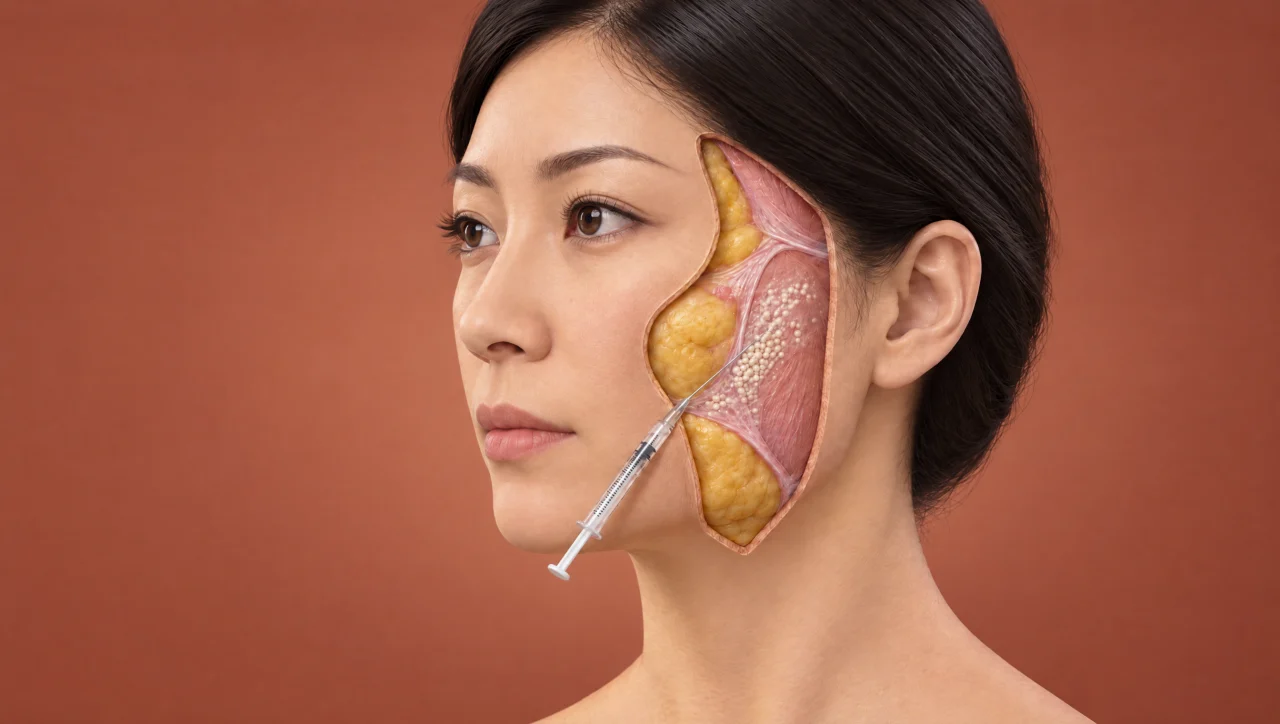
Hyaluronic acid filler: hyaluronic acid molecules are linked together (crosslinked) into a gel. Depending on how strongly they are linked and how big the particles are, some products are firm and hold a shape well while others are soft and spread, so different products are chosen for different areas. MFDS describes cosmetic filler as a product that holds its own volume without any pharmacological action to improve facial wrinkles and volume; no product is approved for breast enlargement, body volume such as the buttocks or calves, or implantation into bone, tendon, ligament or muscle.
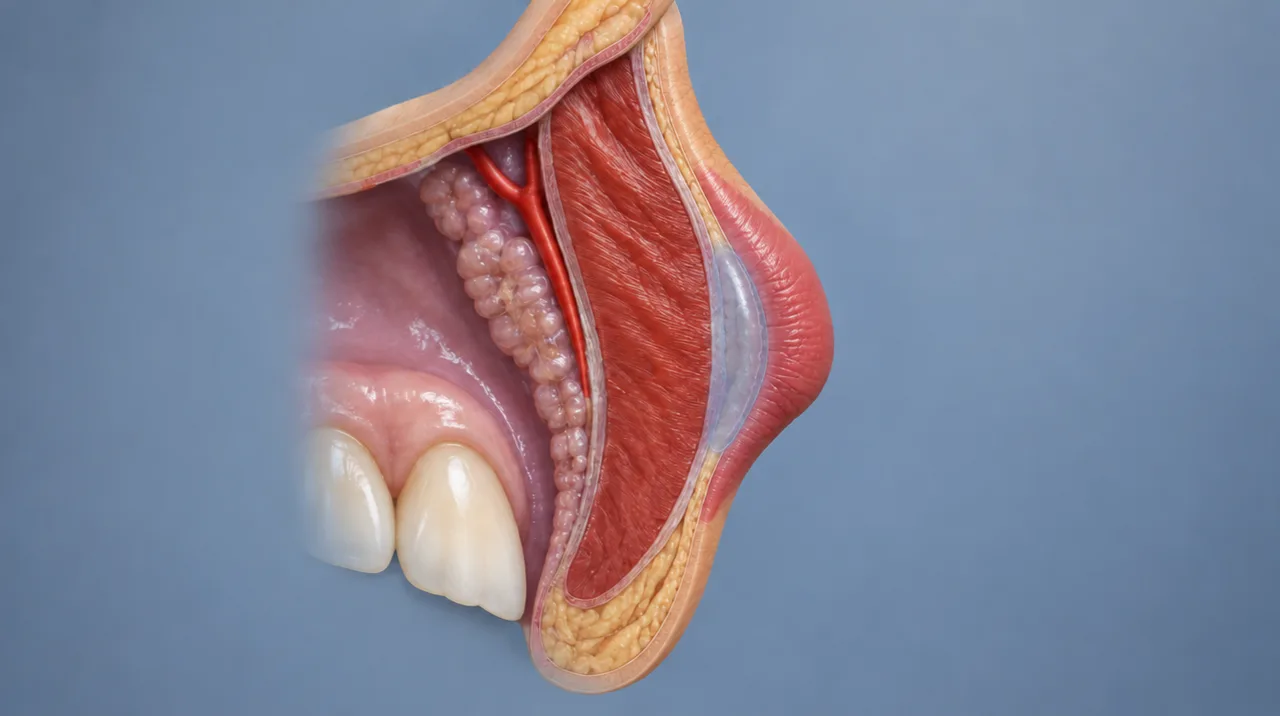
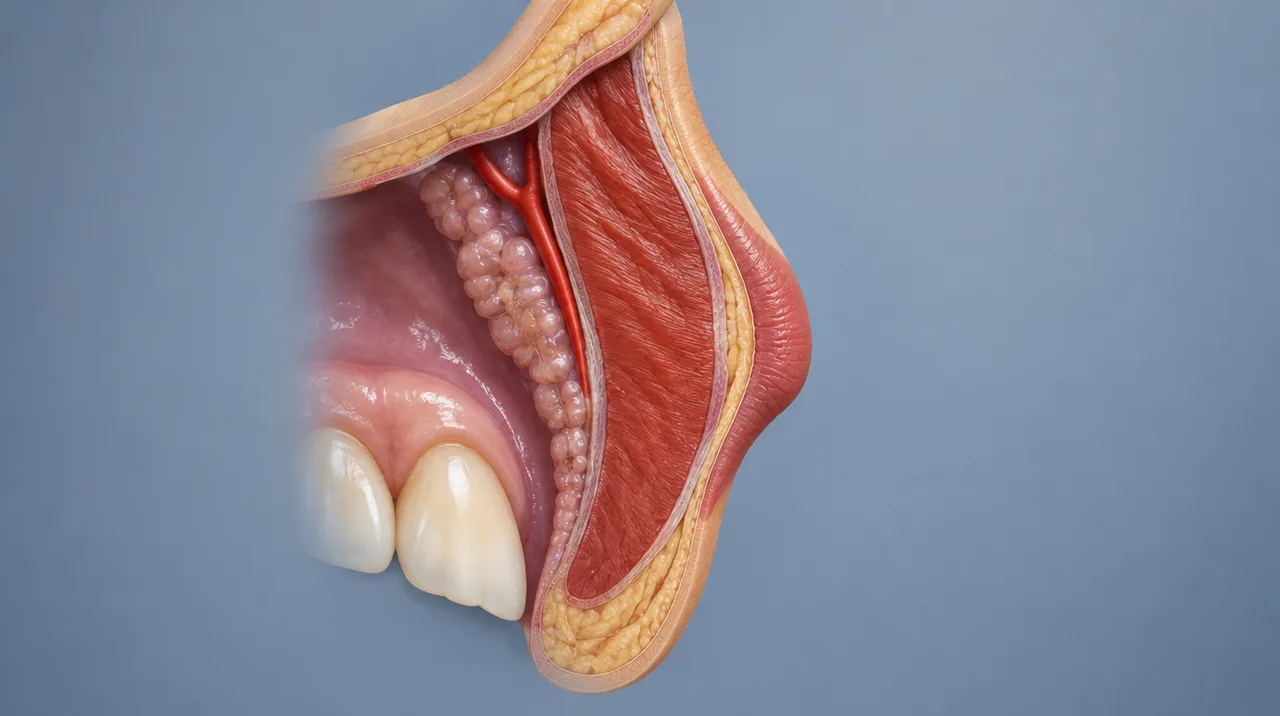 BeforeAfter filler
Non-hyaluronic acid filler: some fillers are made of other materials, such as calcium (CaHA), polycaprolactone (PCL) or PLLA. These do not dissolve with hyaluronidase, so they are hard to reverse. The FDA also notes that non-HA fillers can be harder to remove.
| Filler (hyaluronic acid) | Botox | Juvelook | |
|---|---|---|---|
| What it does | fills a hollow by the amount injected | briefly relaxes a muscle so lines fold less | stimulates collagen so volume builds slowly |
| When it shows | right away | a few days to two weeks | weeks to months |
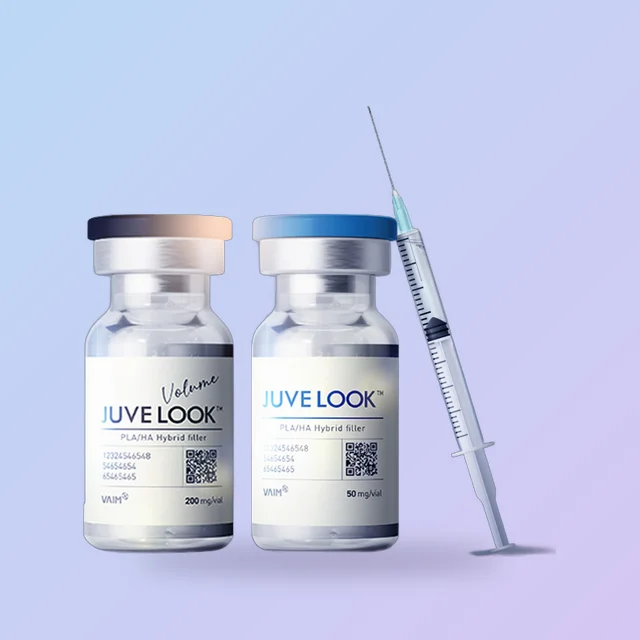
| Reversible? | yes, with a dissolving injection | no, you wait for it to wear off | hard to reverse with a dissolving injection |
See the Juvelook guide for slowly building collagen.
Aftercare
Recovery timeline
Right after
Results show at once. Swelling or bruising possible
Same day
Avoid sauna, heavy drinking, hard exercise and rubbing
Days to 1–2 weeks
Swelling, bruising and tenderness settle
After 1–2 weeks
Judge the shape once swelling is gone (lips, under-eye)
- Swelling for the first few days is normal. The lips and under eyes swell the most, so judge the shape after one to two weeks.
- Do not rub or press hard. Unless the clinic tells you otherwise, do not massage the area yourself.
- Avoid things that increase swelling and bruising on the day, such as a sauna, heavy drinking or hard exercise — clinics commonly advise this.
- Do not wait on skin colour changes, severe pain or vision problems — get help right away.
- Keep your treatment record (product name, cc, areas).
- Do not use needle-free filler pens or filler you bought yourself. The FDA warns these can cause serious damage to the lips or eyes.
FAQ
How many days should I stay in Korea after filler?
Swelling and bruising usually settle within a few days to one to two weeks, and the shape is judged once the swelling is gone. Get filler early in the trip so there is time for a check at the same clinic, and avoid treatment the day before a long-haul flight.
How much is lip filler in Korea?
Filler is priced per cc. In November 2026 market ranges, Korean-made lip filler averaged about ₩70,000–150,000 per 1cc and imported about ₩300,000–430,000 on one platform, with event prices lower. Compare the product name and cc before comparing totals.
What is "Korean style" lip filler?
It is not one standard technique. What many people mean is volume that is noticeable but looks just slightly plump, designed around the whole face rather than copied from a photo. Starting small and topping up about 30 days later if needed, as the studies did, makes the shape easier to control.
Is nose filler in Korea safe?
Nose filler shows right away, but the nose is the area most often reported in cases of vision loss after filler (56.3% of 48 cases in a review). Ask which product will be used, and get help immediately if the skin changes colour, pain is severe or your vision changes.
What should I bring home after filler in Korea?
A written record of the product name, the amount (cc) and the areas. A doctor at home needs it to decide on a top-up, to treat a late lump or swelling, and to know whether hyaluronidase can dissolve it.
Dermal fillers vs botox: can I get both on the same day?
They are often done on the same day. Filler fills hollows and botox relaxes muscles so lines fold less, so they do different jobs. See the botox guide.
Does filler dissolve naturally? Will my skin sag once it is absorbed?
Hyaluronic acid filler is absorbed slowly and you return to how you were before treatment; the natural changes of ageing carry on in the meantime. But as the MRI study shows, filler can stay long after the visible effect fades, so adding a lot at short intervals can build it up. Fillers made of other materials do not dissolve with hyaluronidase, so check which filler is being used.
Is swelling after a filler dissolver normal?
The dissolving injection is still an injection, so swelling and bruising can follow at that spot. Right after dissolving, swelling and leftover filler make it hard to judge the real state, so wait at least two weeks before deciding on a refill. Skin colour changes, severe pain or vision problems are different — get help right away.
Sources
- Korea Ministry of Food and Drug Safety (MFDS), Medical Device Information Portal. Item and company search — tissue-repair biomaterials (class 4); Juvederm (AbbVie Korea), Restylane (Galderma Korea), Neuramis (Medytox) approval information
- Korea Ministry of Food and Drug Safety (MFDS) via Korea.kr policy briefing. What to watch out for with cosmetic filler, 2019
- Korea Ministry of Food and Drug Safety (MFDS). Medical device safety information on cosmetic fillers (safety letter), 2016
- U.S. FDA. Dermal Fillers (Soft Tissue Fillers)
- U.S. FDA. Dermal Filler Do's and Don'ts for Wrinkles, Lips and More
Show 16 more sources
- Beleznay K et al. Avoiding and Treating Blindness From Fillers — A Review of the World Literature. Dermatol Surg, 2015
- Beleznay K et al. Update on Avoiding and Treating Blindness From Fillers — A Recent Review of the World Literature. Aesthet Surg J, 2019
- Tamura T et al. Serious Complications of Hyaluronic Acid Fillers — A Retrospective Study of 290,307 Cases. Ann Plast Surg, 2025
- Park KH et al. Iatrogenic occlusion of the ophthalmic artery after cosmetic facial filler injections — a national survey by the Korean Retina Society. JAMA Ophthalmol, 2014
- Czumbel LM et al. Hyaluronic Acid Is an Effective Dermal Filler for Lip Augmentation — A Meta-Analysis. Front Surg, 2021
- Geronemus RG et al. Safety and Effectiveness of VYC-15L, a Hyaluronic Acid Filler for Lip and Perioral Enhancement — One-Year Results From a Randomized, Controlled Study. Dermatol Surg, 2017
- Narins RS et al. Persistence and improvement of nasolabial fold correction with nonanimal-stabilized hyaluronic acid 100,000 gel particles/mL filler on two retreatment schedules — results up to 18 months. Dermatol Surg, 2008
- Biesman BS et al. A Multicenter, Randomized, Evaluator-Blinded Study to Examine the Safety and Effectiveness of Hyaluronic Acid Filler in the Correction of Infraorbital Hollows. Aesthet Surg J, 2024
- Marcus K et al. A Randomized Trial to Assess Effectiveness and Safety of a Hyaluronic Acid Filler for Chin Augmentation and Correction of Chin Retrusion. Plast Reconstr Surg, 2022
- Harb A, Brewster CT. The Nonsurgical Rhinoplasty — A Retrospective Review of 5000 Treatments. Plast Reconstr Surg, 2020
- Master M et al. Hyaluronic Acid Filler Longevity in the Mid-face — A Review of 33 Magnetic Resonance Imaging Studies. Plast Reconstr Surg Glob Open, 2024
- Kroumpouzos G, Treacy P. Hyaluronidase for Dermal Filler Complications — Review of Applications and Dosage Recommendations. JMIR Dermatol, 2024
- Borzabadi-Farahani A et al. A Scoping Review of Hyaluronidase Use in Managing the Complications of Aesthetic Interventions. Aesthetic Plast Surg, 2024
- Seo J et al. Incidence and Characteristics of Delayed Inflammatory Reactions Secondary to Hyaluronic Acid Filler Injections — A Systematic Review With Meta-Analysis. Aesthet Surg J Open Forum, 2026
- Rootman DB et al. Does the Tyndall effect describe the blue hue periodically observed in subdermal hyaluronic acid gel placement? Ophthalmic Plast Reconstr Surg, 2014
- Diwan Z et al. Evaluation of Current Literature on Complications Secondary to Lip Augmentation Following Dermal Filler Injection. J Clin Aesthet Dermatol, 2023
Dr. Park HwonhamDR.BAQUOPPEUM Clinic Konkuk Univ.Contents · 12
- 01Lip, nose and chin filler in Korea: which area fits?
- 02Planning filler in Seoul: days, flights and records
- 03Korean filler before and after: clinic case photos
- 04Filler price in Korea: what decides the cost
- 05How to choose a filler clinic in Korea: a checklist
- 06Filler gone wrong? Side effects and warning signs
- 07Filler dissolver (hyaluronidase): swelling, timing and limits
- 08How long does filler last?
- 09Under eye filler in Korea: the short version
- 10What filler is: dermal fillers vs botox and Juvelook
- 11Aftercare
- 12FAQ
More in this section

This page is general information, not medical advice. Decide on any treatment after consulting a medical professional.