Treatments
Potenza RF Microneedling in Korea
Before and After, Downtime & Cost
Written by BeautyCoordi Editorial TeamMedically reviewed by  Dr. Park HwonhamDR.BAQUO10 min read
Contents · 10
- 01Potenza microneedling before and after: when results show and how long they last
- 02Potenza downtime and aftercare: makeup, photos and flying home
- 03Potenza side effects
- 04Potenza vs Morpheus8 and Fraxel
- 05Potenza cost in Korea: what to compare
- 06How many Potenza sessions? Planning around a trip
- 07Does Potenza hurt?
- 08How Potenza RF microneedling works
- 09Potenza tips and the pumping tip (Juvelook Potenza)
- 10FAQ
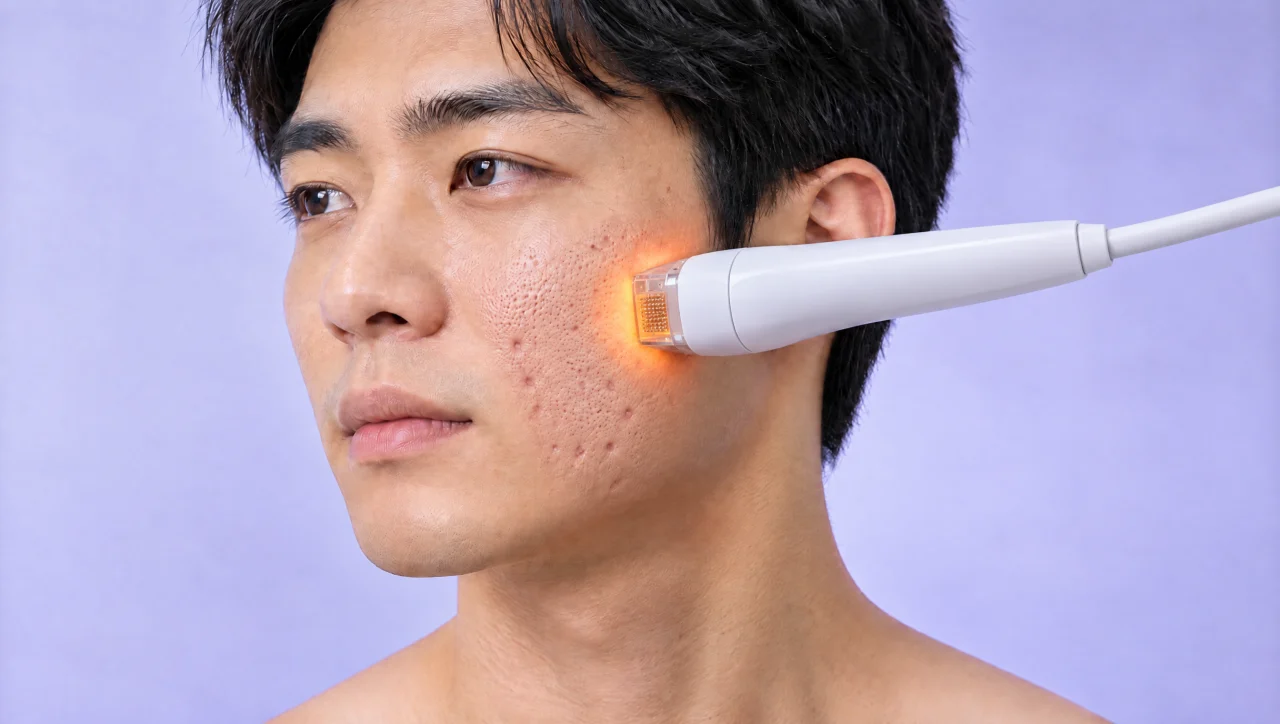
Potenza RF microneedling before and after: enlarged pores, shallow acne scars and rough texture usually start to look a little more refined from around two to four weeks, then keep improving over months and with each session — scars become less noticeable rather than disappearing. Potenza is an RF microneedling device made in Korea by Jeisys Medical: very fine needles go into the dermis and release radiofrequency heat from their tips, prompting the skin to make new collagen while it recovers. Because the tip, needle depth and RF mode can be changed for each concern, clinics in Seoul use it widely for pores, acne scars, rough texture and even active acne, and some add a skin booster through its pumping tip.
Potenza RF microneedling at a glance
- Potenza RF microneedling before and after: change shows from around two to four weeks and builds over months; one session rarely brings a big change
- Potenza how many sessions: studies usually ran three sessions one month apart; one trip usually covers one session
- Potenza downtime: redness, dot-like needle marks and swelling, usually two to three days; skip makeup for two to three days
- Potenza RF microneedling side effects: mostly redness, swelling and stinging for a few days; rarely pigmentation or needle-pattern marks
- Potenza vs Morpheus8: the same microneedle RF family — needle type, depth and settings matter more than the device name
- Potenza for acne scars: deep, firm scars have limits
Potenza microneedling before and after: when results show and how long they last
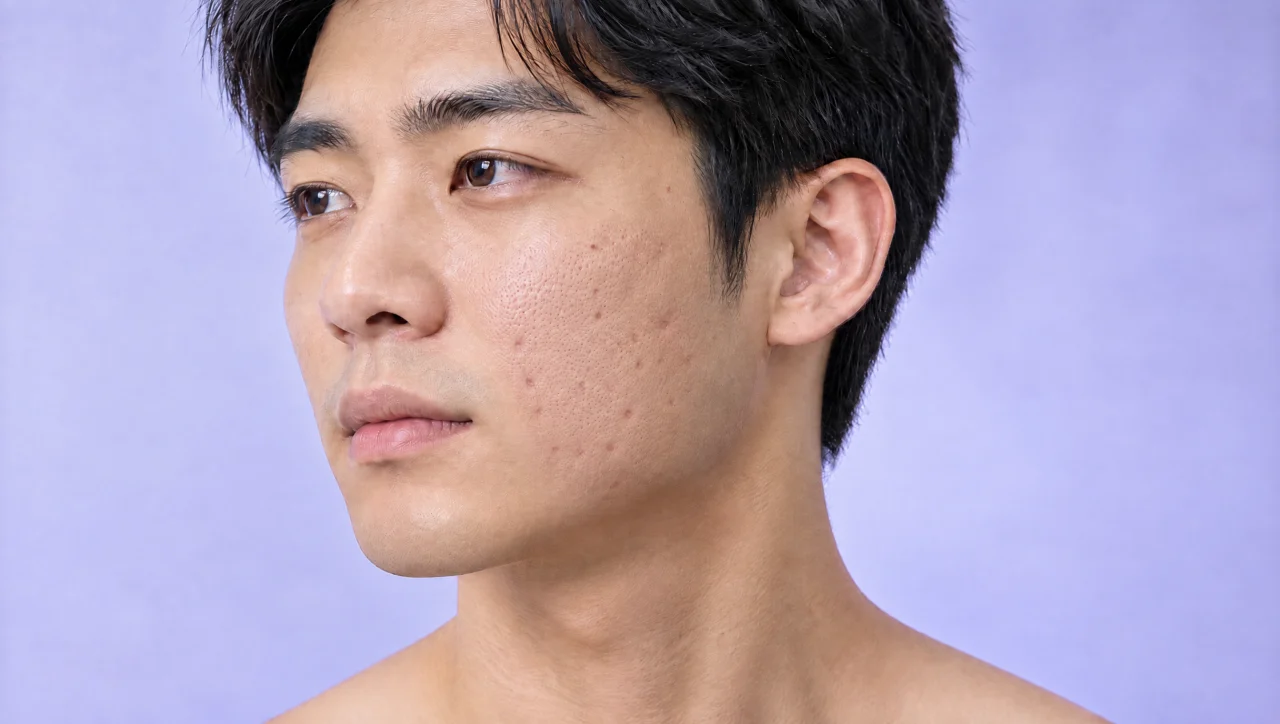
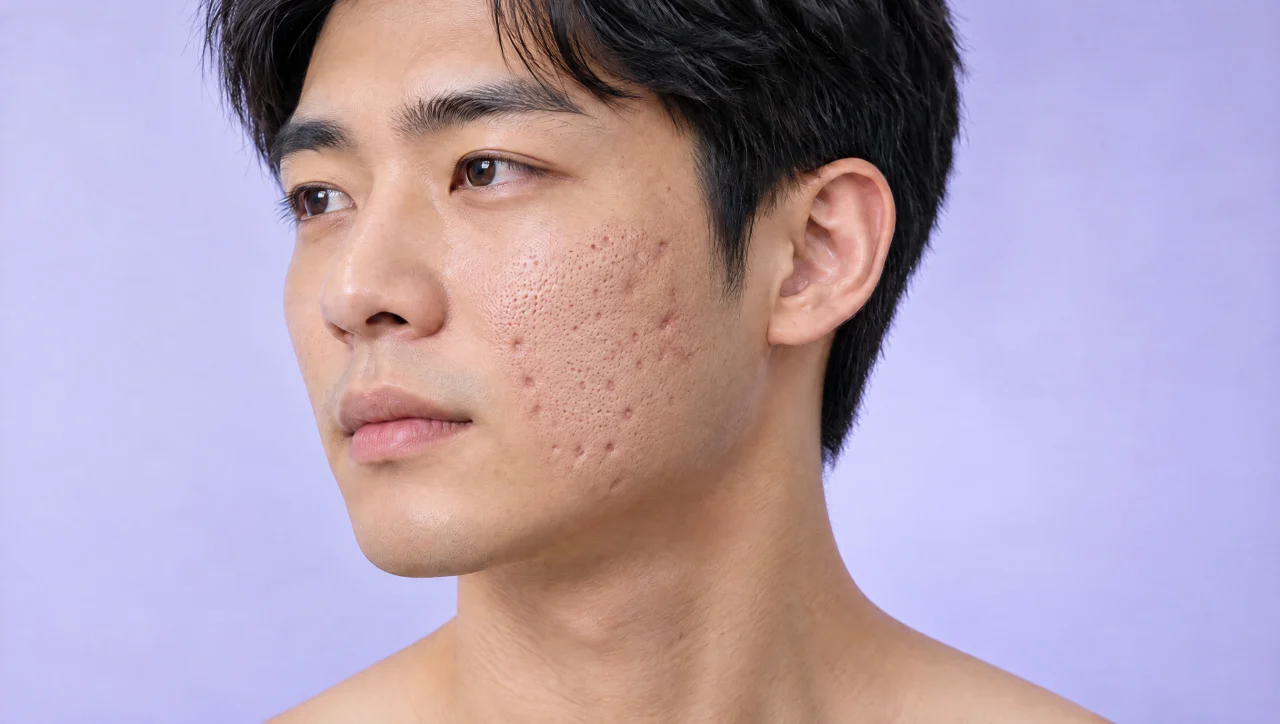 BeforeAfter 3 sessions
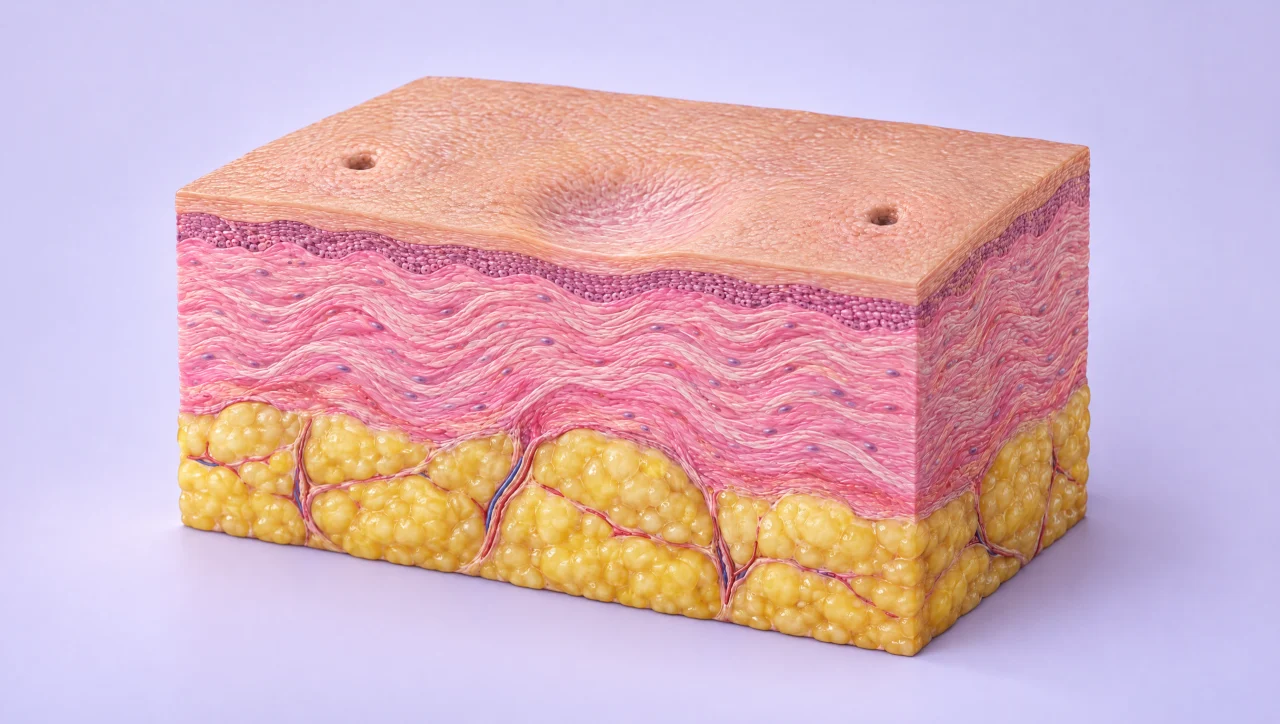
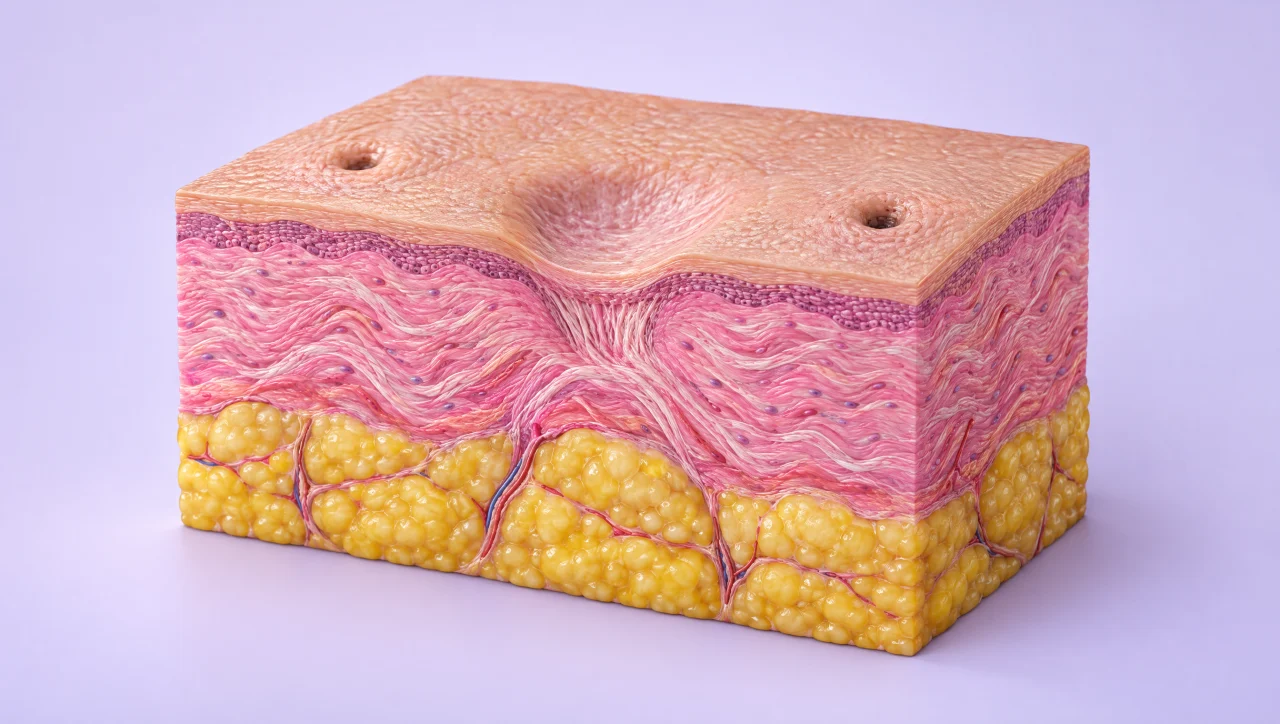 BeforeMonths later
- Right after: the skin can look smoother because of swelling, but this is not the real result
- Around two to four weeks: downtime is over and collagen starts to form, so texture, tone and pores gradually look more refined
- Months after the course: scar studies followed changes up to three to six months after the last treatment
In a study of 26 Asian patients with acne scars treated three times one month apart, the largest share (42.3%) reported 26–50% improvement six months after the last treatment. Knowing that scars become less noticeable rather than disappearing helps avoid the "it didn't work" disappointment — and is the fair way to read any Potenza before-and-after photo.
How long results last depends on the concern. Scar and texture improvement, where collagen fills in, lasts relatively long, while reduced oiliness is shorter. In a study of Korean acne patients, after one session sebum stayed below baseline for up to eight weeks, but acne improvement peaked at two weeks and mostly returned to baseline by eight weeks.
Potenza downtime and aftercare: makeup, photos and flying home
Recovery timeline
Same day
Redness and a hot feeling
A few days
Pinpoint needle marks, thin crusts, swelling
2–3 days
Makeup usually from here (1 to 3–4 days depending on skin)
Up to 7 days
Redness and swelling mostly settle
| Reaction | Usually lasts |
|---|---|
| Redness, hot feeling | the day of treatment to a few days |
| Dot-like needle marks, thin scabs | a few days |
| Swelling | usually a few days |
| Makeup | usually skip for two to three days; from one day to three or four days or more, depending on your skin |
Plan for about two to three days of downtime. A review of 85 microneedling papers also found the common reactions were redness, swelling and pain lasting up to about seven days. Recovery takes a little longer with deeper needles and higher energy, so leave a few days of margin before important plans, photos or your flight home. Afterwards, use sun protection and moisturiser.
Potenza side effects
No treatment is side-effect free. Reactions reported with microneedle RF such as Potenza:
- Common: redness, swelling, stinging, itching — mostly settle within a few days
- Acne-like breakouts: temporary in some people
- Post-inflammatory hyperpigmentation: higher risk with darker skin
- Needle-pattern red marks: can briefly appear in the pattern of the needles if the skin is very sensitive or aftercare is lacking; they do not last long
- Rare: infection, long-lasting scarring in a needle pattern, granuloma reactions
Asian skin tends to develop pigmentation after lasers, so this matters. A review of 35 studies on darker skin (Fitzpatrick types III–VI) found seven reports of temporary pigmentation, one of long-lasting pigmentation and one of permanent scarring, so the risk was low, though the studies were not of high quality. If redness or brown patches persist — even after you are home — contact the clinic that treated you right away.
Tell the clinic first if you have inflammation or an infection such as herpes in the area, are pregnant or breastfeeding, have a pacemaker or other electronic device in your body, have a metal allergy, form keloids easily, are taking or recently stopped isotretinoin (an acne medicine), or recently had filler — the plan or whether to treat may change.
Potenza vs Morpheus8 and Fraxel
| Potenza | Fractional CO2 laser (Fraxel-type) | Morpheus8 · Secret · Scarlet | |
|---|---|---|---|
| How | needles deliver RF heat into the dermis | laser burns tiny holes in the skin | the same microneedle RF as Potenza |
| Surface damage | relatively low | relatively high | relatively low |
| Scar improvement | steady improvement | slightly greater in studies | depends on device and settings |
| Redness, pigmentation | shorter, lower risk | longer, higher risk | relatively low |
A meta-analysis of eight randomised controlled studies (249 patients) found fractional CO2 laser improved scars slightly more, but with about 4.4 times the risk of pigmentation and about 1.7 more days of redness. In another split-face study, results three months after one treatment were similar; the laser caused more redness, while microneedle RF hurt more.
Morpheus8 (InMode), Secret and Scarlet all belong to the same microneedle RF family as Potenza. Rather than the device name, the needle type (insulated or non-insulated), depth, energy settings and the doctor's experience decide the result. Treatments that tighten the whole face with heat are covered in the Thermage and Onda guide.
Which layer each treatment works on
Layers are not to scale. Thermage and Onda heat the dermis and the fat below broadly; Juvelook runs from Skin (dermis) to Volume (subcutis). Sources are in each guide.
Potenza cost in Korea: what to compare
Potenza prices differ between clinics because the conditions differ. Compare these five on the same basis:
- Which tip — standard needle tip, pumping tip or one-pin tip
- Full face or specific areas, and how many shots
- Whether an ingredient is added through the pumping tip (Juvelook, exosomes and so on), and which one
- A single-session price or a course price
- Whether numbing and soothing care are included
Once the conditions match, prices often do not differ much between clinics, so check that the conditions are the same before comparing numbers. Current package prices with English support are on the DR.BAQUO packages page.
How many Potenza sessions? Planning around a trip
| Concern | In studies | Result |
|---|---|---|
| Acne scars | three sessions one month apart | scar score fell by more than half; greater improvement with more sessions |
| Enlarged pores | three sessions one to three months apart | pore score 3.55 → 2.59 |
| Active acne | median of three sessions | lesions 45 → 18.5; improvement in 94% |
The skin needs time to recover, so sessions are not repeated at very short intervals — a short stay is not a reason to squeeze them together. In practice, three or more sessions a month apart are commonly recommended, and continuing maintenance after the first course, based on your skin, can improve texture, tone and firmness together.
If you are visiting from abroad, a monthly rhythm means one trip usually fits one session. If you return to Seoul regularly, ask at the consultation how to line up a course across your visits.
Not sure how many sessions or which tip suits your pores or scars — or how to fit them around your trip? Ask us before you book.
Ask on WhatsAppDoes Potenza hurt?
Because heat is delivered as the needles go in, there is a stinging, hot feeling, so treatment usually starts after numbing cream has been applied well.
| Study | Average pain score (out of 10) |
|---|---|
| Asian acne scars (3 sessions) | 5.6 |
| Enlarged pores (3 sessions) | 6.42 |
| Acne scar split-face comparison | microneedle RF 7.0, CO2 laser 5.5 |
On average, most people find it bearable with numbing cream. It tends to feel more painful with deeper needles and higher energy, and in areas close to bone such as the forehead and jaw, so mention it at the consultation if pain worries you.
How Potenza RF microneedling works
- Needles open a path: 16–49 fine needles go in to the chosen depth (adjustable from 0.5 to 4.0 mm).
- Heat stimulus: RF energy travels through the needles and forms tiny zones of heat coagulation inside the dermis. Unlike a laser that burns a wide area of the surface, the epidermis is relatively spared and the heat collects underneath.
- Regeneration: as the skin heals these tiny wounds, fibroblasts become active and new collagen and elastic fibres form. In a pig skin study, type I and type III collagen and elastic fibres increased significantly 28 days after treatment.
There are two RF modes as well. Monopolar spreads heat wider and deeper and is used more for firmness; bipolar concentrates heat shallowly between the needles and is used more for texture and acne. The manufacturer says the 1 MHz and 2 MHz frequencies can be used together.
Potenza tips and the pumping tip (Juvelook Potenza)
Potenza's biggest feature is that the tip is swapped for each concern. The main tips the manufacturer lists:
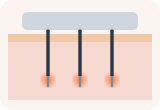
Insulated tip (I)
heat mainly at the needle tips
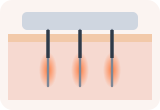
Semi-insulated tip (S)
heat over the lower part of the needle
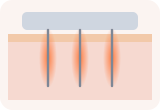
Non-insulated tip (N)
heat from the whole needle
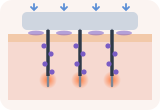
Pumping tip (CP)
air pushes applied ingredients into the channels
Orange shows where heat is released; the dark part of each needle is insulated. Simplified from the manufacturer description.
| Tip | Feature | Use listed by the manufacturer |
|---|---|---|
| Semi-insulated tip (S) | only part of each needle insulated; heat over a wider range | melasma, redness, pores |
| Insulated tip (I) | heat mainly from the needle tips, reducing damage to the epidermis | wrinkles, skin regeneration |
| Non-insulated tip (N) | heat from the whole needle | melasma, redness, regeneration, firmness |
| Pumping tip (CP) | air pressure pushes applied ingredients into the needle channels | drug delivery, scars |
| One-pin tip | a single needle targeting one spot at a time | active acne, syringoma |
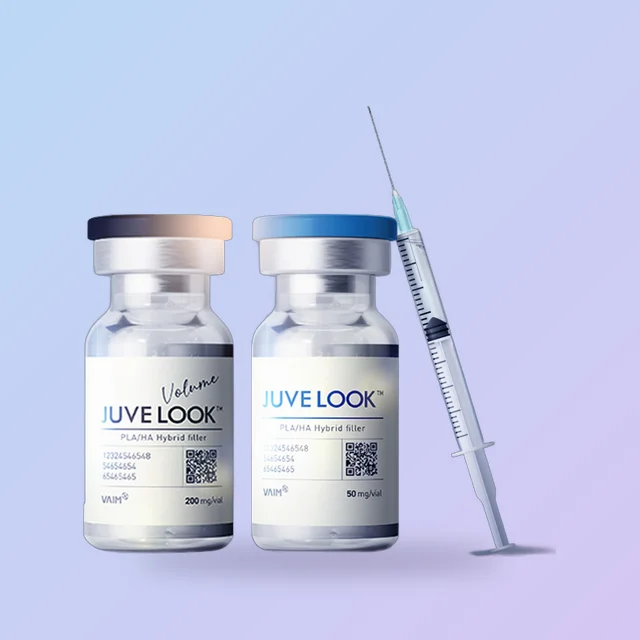
The pumping tip (known outside Korea as the Fusion Tip) has 21 insulated needles (0.5–2.5 mm deep) with two air chambers, designed to release air at the moment the needle channels open so ingredients applied to the skin go in deeper. That is why some clinics offer Juvelook Potenza or exosome Potenza, adding a skin booster through the pumping tip. It gets into the skin better than simply applying the ingredient and tends to hurt less than injecting it, so it can be an option for people who find injections very hard.
The evidence for these combinations is still limited. In a split-face study of 24 Asian patients, the side where PLLA (a similar family of ingredient to Juvelook's PDLLA) was applied right after microneedle RF showed greater improvement in texture and scar volume at six months, but studies of Juvelook or exosomes delivered through the pumping tip are still lacking. Applying products not approved for use inside the skin into needle channels has also been flagged as needing caution, so always ask which ingredient will be used. Juvelook has its own Juvelook guide.
FAQ
Is Potenza worth it? Why do some reviews say it didn't work?
One session rarely brings a big change, and scars become less noticeable rather than disappearing completely. Right after treatment the skin can look smoother because of swelling, but the real change shows from around two to four weeks and over months. Some effects, such as reduced oiliness, are short-lived, so it helps to set expectations for your own concern at the consultation.
Does one Potenza session work?
Some people notice changes in texture or oiliness after one session, but most studies ran three sessions one month apart as one course, and improvement was greater with more sessions.
Potenza vs regular microneedling (SkinPen): what is the difference?
Both use fine needles to make tiny channels in the skin. Potenza also releases radiofrequency heat from the needles inside the dermis, and its tip, needle depth and RF mode can be changed for each concern. The studies cited on this page looked at microneedle RF; they do not compare Potenza head-to-head with needling alone.
Potenza vs Thermage: which is which?
Potenza delivers heat through needles into the dermis and is used for pores, acne scars and texture. Treatments that tighten the whole face with heat, such as Thermage, are covered in the Thermage and Onda guide.
What is the aftercare after Potenza?
Skip makeup for about two to three days (from one day to three or four days or more, depending on your skin), and use sun protection and moisturiser. Heavy sun exposure while the skin is sensitive raises the risk of pigmentation, so be careful when sightseeing. If redness or brown patches persist — even after you are home — contact the clinic that treated you.
Can I get Potenza with active acne?
It is sometimes used to treat acne. Whether and how to treat depends on how inflamed it is and which medicines you take, so check at the consultation first.
Sources
- Jeisys Medical. POTENZA product specifications (modes, frequencies, needle depth, tips)
- Cynosure. Potenza Physician Brochure — Fusion Tip
- Xu Y et al. Microneedle Radiofrequency Induces Extracellular Matrix Remodeling Through Fibroblast Activation — A Histological Study in a Porcine Model. Lasers Surg Med, 2025
- Vejjabhinanta V et al. The efficacy in treatment of facial atrophic acne scars in Asians with a fractional radiofrequency microneedle system. J Eur Acad Dermatol Venereol, 2014
- Huang L et al. Efficiency and safety of microneedling fractional radiofrequency in the treatment of Chinese atrophic acne scars. J Cosmet Dermatol, 2023
Show 9 more sources
- Huang Y et al. Efficacy and safety of fractional micro-needling radiofrequency for the treatment of enlarged pores on the cheeks of a Chinese cohort. Lasers Med Sci, 2024
- Lee S et al. A Retrospective Analysis of the Clinical Response and Safety of Radiofrequency Microneedling Treatment in Managing Acne Vulgaris. Aesthet Surg J Open Forum, 2026
- Lee KR et al. Assessment of treatment efficacy and sebosuppressive effect of fractional radiofrequency microneedle on acne vulgaris. Lasers Surg Med, 2013
- Argobi Y et al. Fractional CO2 Laser Versus Micro Needling Radiofrequency for Post Acne Scarring — A Meta-Analysis of RCTs. J Cosmet Dermatol, 2026
- Hendel K et al. Fractional CO2-laser versus microneedle radiofrequency for acne scars — A randomized, single treatment, split-face trial. Lasers Surg Med, 2023
- Syder NC et al. Radiofrequency and Radiofrequency Microneedling in Skin of Color — A Review of Usage, Safety, and Efficacy. Dermatol Surg, 2023
- Chu S et al. Safety Profile for Microneedling — A Systematic Review. Dermatol Surg, 2021
- Kupwiwat R et al. Transdermal Delivery of Poly-L-Lactic Acid via Fractional Microneedle Radiofrequency for Atrophic Acne Scars — A Split-Face Randomized Study. Dermatol Ther (Heidelb), 2026
- Ren K et al. Fractional microneedle radiofrequency treatment for enlarged facial pores — A real-world retrospective observational study on 75 patients. J Cosmet Dermatol, 2022
Dr. Park HwonhamDR.BAQUOPPEUM Clinic Konkuk Univ.Contents · 10
- 01Potenza microneedling before and after: when results show and how long they last
- 02Potenza downtime and aftercare: makeup, photos and flying home
- 03Potenza side effects
- 04Potenza vs Morpheus8 and Fraxel
- 05Potenza cost in Korea: what to compare
- 06How many Potenza sessions? Planning around a trip
- 07Does Potenza hurt?
- 08How Potenza RF microneedling works
- 09Potenza tips and the pumping tip (Juvelook Potenza)
- 10FAQ
More in this section
This page is general information, not medical advice. Decide on any treatment after consulting a medical professional.