Treatments
Thread Lift in Korea
Mint Thread Lift Cost & Before and After
Written by BeautyCoordi Editorial TeamMedically reviewed by  Dr. Park HwonhamDR.BAQUO8 min read
Contents · 11
- 01How does a thread lift work?
- 02Thread lift before and after
- 03How long does a thread lift last?
- 04Who is a good candidate?
- 05Mint threads, Silhouette Soft and other types
- 06Which areas can be treated?
- 07Pain, swelling and downtime on a trip
- 08Side effects
- 09Thread lift vs Ultherapy and Thermage
- 10How much does a thread lift cost in Korea?
- 11FAQ
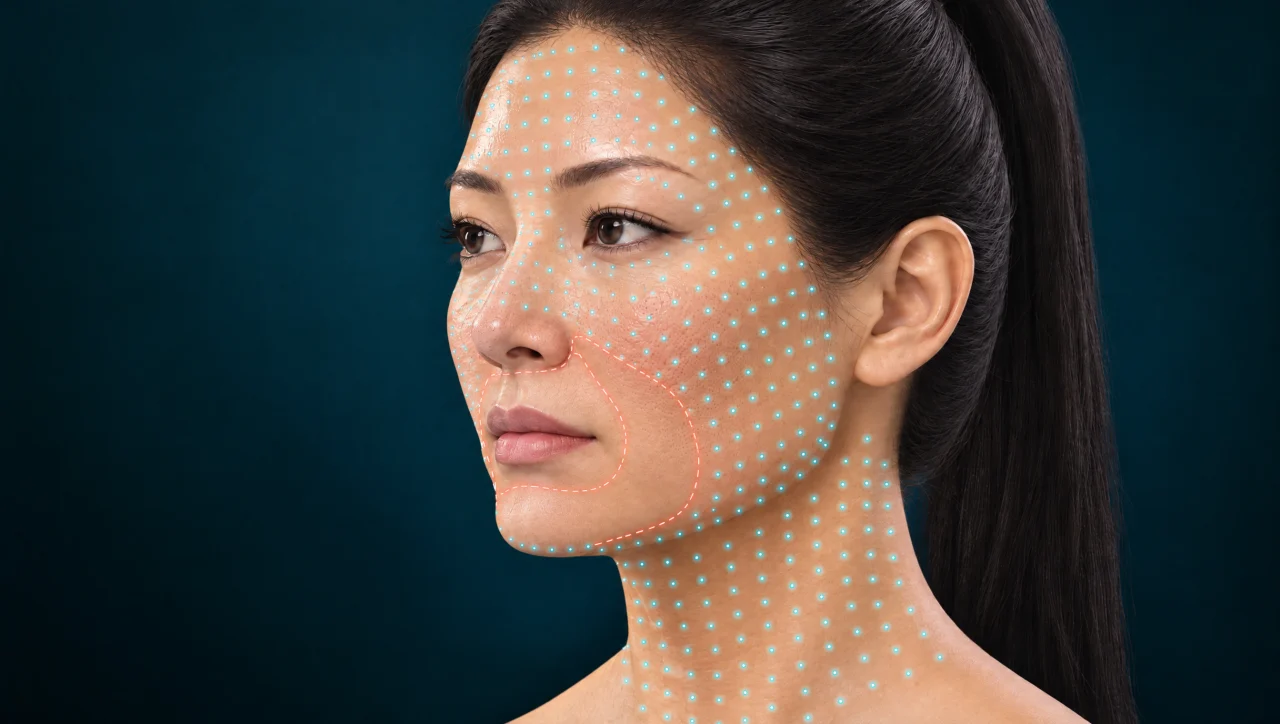
A thread lift places dissolvable threads with tiny barbs or cones under the skin, so they catch sagging tissue and lift it. Unlike Ultherapy or Thermage, which tighten with heat over weeks to months, a thread lift moves tissue mechanically — the change in contour shows right away. It developed from facelift surgery: the same kind of suture that supports tissue during surgery is placed through tiny needle openings, with no incision. In Korea, PDO barbed threads such as Mint are the most common choice.
Thread lifting at a glance
- Good fit: usually from the 40s, with sagging of the jawline, cheeks or smile-line area — decided after a doctor sees your face
- Results: visible right after; settles naturally once swelling goes down over a few weeks
- How long: threads dissolve in about 6–12 months; after a year or more it may feel a little lower again
- Swelling: usually one to two weeks — plan your flight and photos around it
- What matters most: the design and the doctor's experience; results vary a lot between doctors
How does a thread lift work?
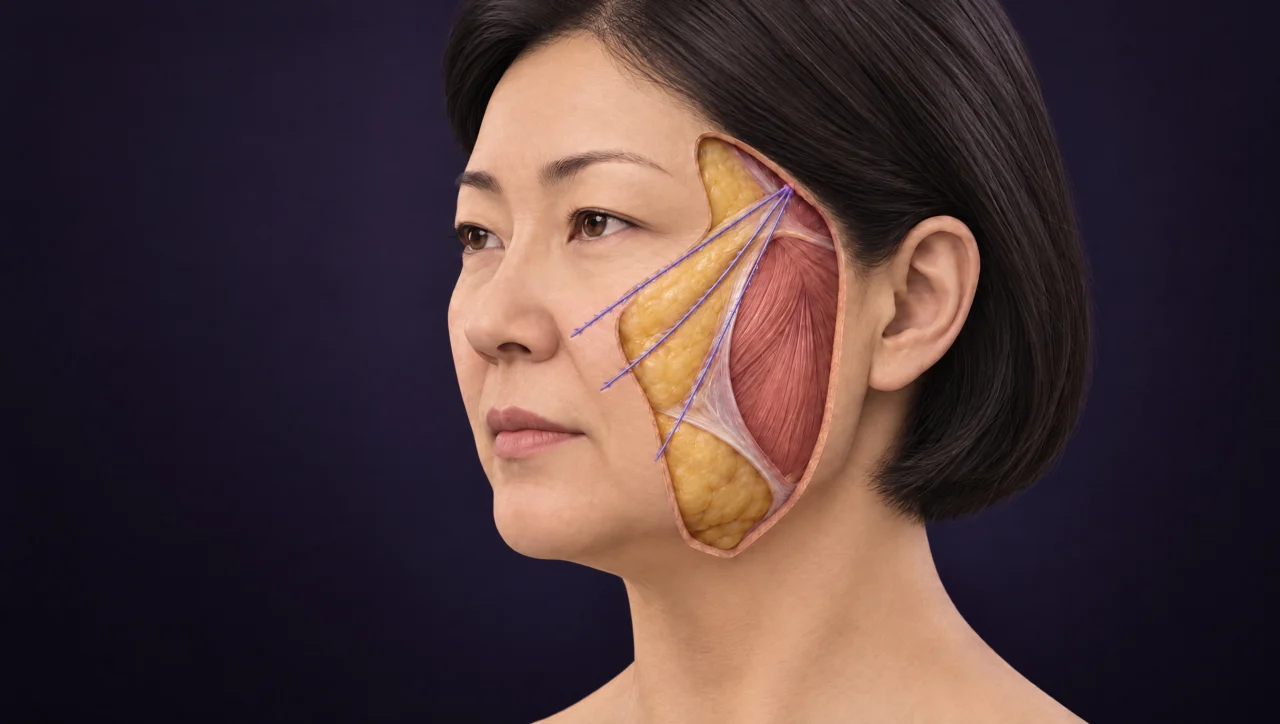
- Anchor and lift: the thread goes into the fat layer through a tiny needle opening and is hooked between a firm anchor point above and the sagging tissue to be lifted. Its barbs or cones grip the surrounding tissue, so when the thread is drawn up and fixed, the sagging tissue moves with it.
- Collagen: the body treats the thread as foreign and builds a thin fibrous layer around it, increasing collagen. In an animal study, type I collagen around barbed PDO threads stayed higher than normal skin for seven months.
- Dissolving: the thread usually dissolves over six months to a year, and the tissue reaction it leaves behind keeps some of the tension.
Seen in cross-section, this is how the thread grips the fat layer:
Thread lift before and after
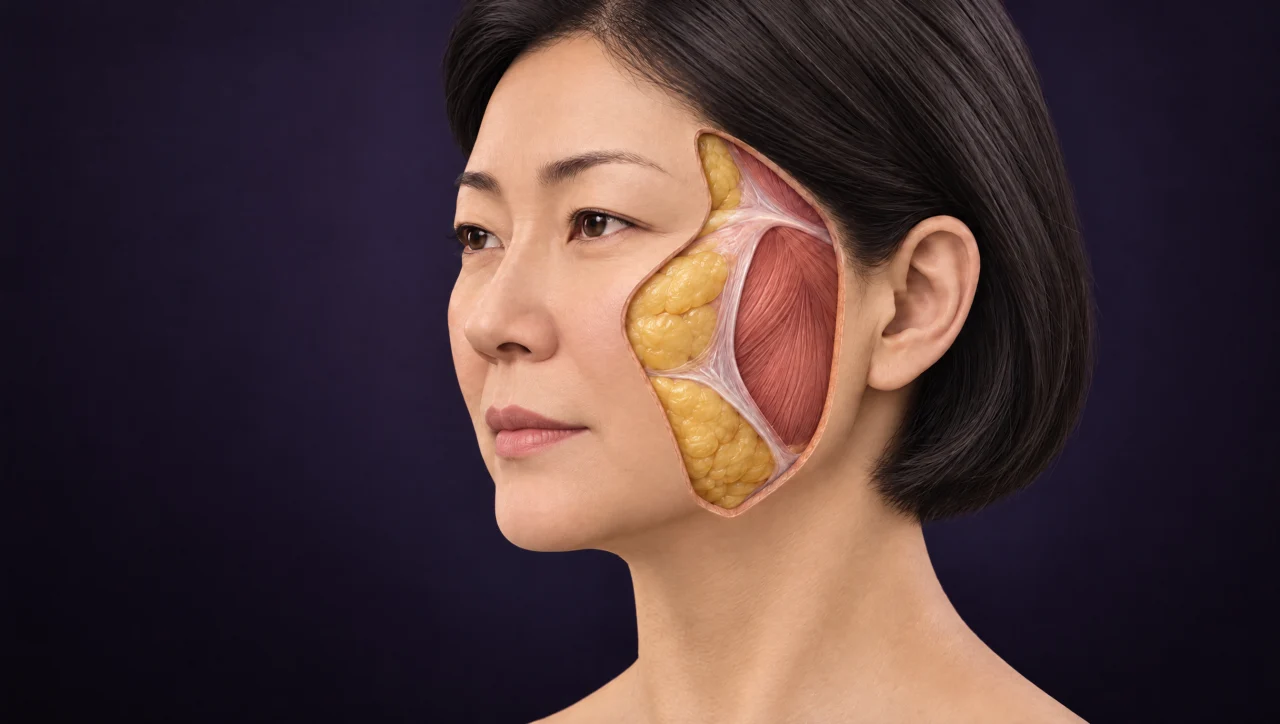
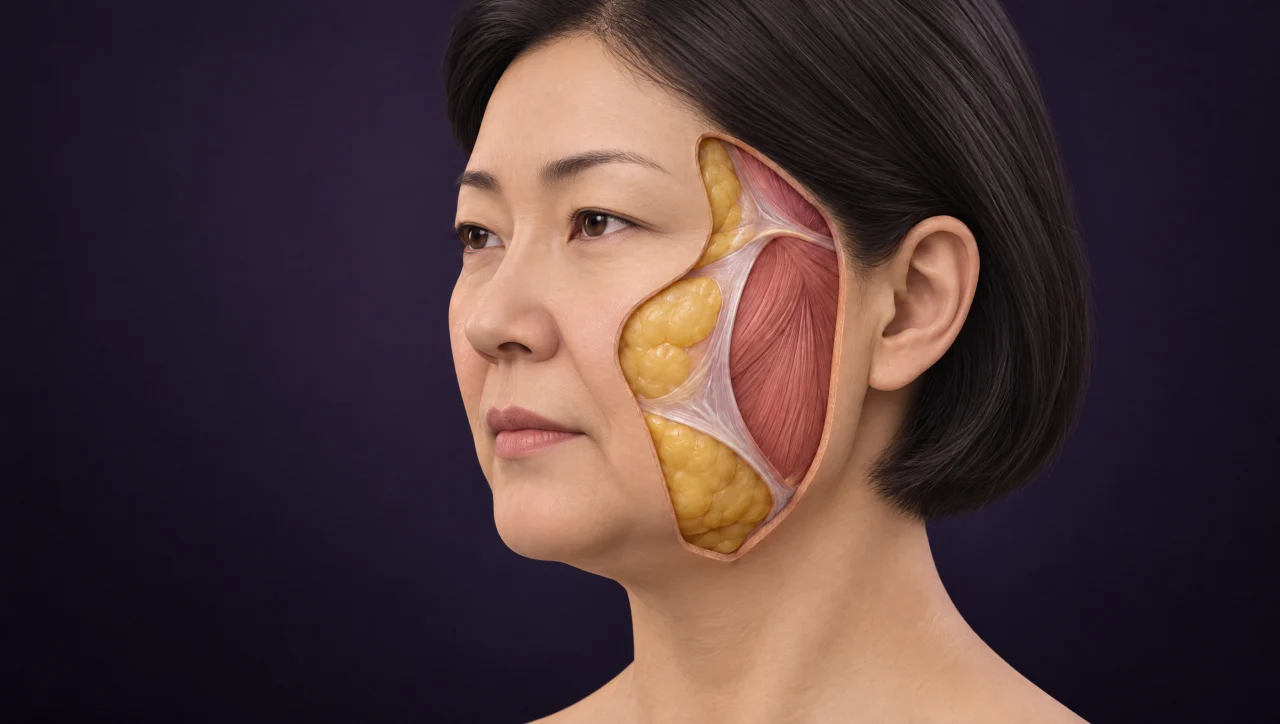 BeforeMonths later
Before-and-after photos online are often taken right after treatment, when swelling makes the lift look stronger. The fairer comparison is a few weeks later, once swelling has gone down.
How long does a thread lift last?
- Right after: the lifted contour is visible at once, and swelling can make it look higher at first
- A few weeks: swelling settles and the result looks natural
- 6–12 months: the threads dissolve while the collagen tissue around them supports the area
- After a year or more: it may feel a little lower again; how long it lasts varies with the thread type and number, how much sagging there was, and age
You can make it last longer. Keeping body fat and skin firmness in check and regular maintenance with a lifting device such as Ultherapy or Onda help the thread lift result hold for longer.
Research also says to keep expectations realistic. In a meta-analysis of 26 studies, satisfaction fell from 98% right after treatment to 88% at long-term follow-up. A 2025 review of 12 studies on dissolvable threads (818 people) confirmed improvement right after treatment in every study, but the longest follow-up was two years.
Not sure whether threads suit your sagging, or how many you need? Ask us before you book your trip.
Ask on WhatsAppWho is a good candidate?
Whether threads suit you is something an experienced doctor should decide by seeing your face. Age and sagging matter, but so do skin thickness, fat and the direction of sag — and they change which thread is recommended. There is no need for it at a very young age; it is usually suggested from the 40s onward. If you are booking from abroad, send clear front and side photos first, then confirm at the in-person consultation.
| Usually a good fit | Threads have limits |
|---|---|
| A clear direction of sag, such as jowls or smile lines | Heavy sagging with loose skin |
| You want a quick contour change without surgery | Very thin skin where threads may show |
| You plan regular maintenance with a lifting device | Little sagging yet, at a young age |
Mint threads, Silhouette Soft and other types
| Type | What it looks like | What it does |
|---|---|---|
| Barbed (cog) PDO thread — e.g. Mint | tiny barbs along the thread | grips tissue tightly along its length and pulls it toward the anchor point |
| Cone thread — e.g. Silhouette Soft | dissolvable cones at intervals (PLLA·PLGA) | lifts tissue little by little from each cone |
| Smooth (mono) thread | no barbs | collagen and skin texture rather than lifting |
Mint and Silhouette Soft differ in pulling principle and material, so they suit different cases. But results depend as much on how many threads go in, in which direction and depth, and where they are anchored as on the brand — and that is the doctor's call for each face.
Which areas can be treated?
| Area | Common concern |
|---|---|
| Smile-line area, front cheek | nasolabial folds, cheek sagging |
| Lower cheek beside the mouth | sagging that makes the mouth corners look heavy |
| Jawline | jowls, a blurred jaw contour |
| Double chin | sagging under the chin — long threads placed like a hammock |
| Brow, forehead | drooping brows, heavy-looking eyelids |
Depth, direction and anchor point differ by area. In the front of the mid-face, where expression muscles are dense, threads are not placed in the shallow muscle layer.
Pain, swelling and downtime on a trip
Local anaesthetic is given at the entry points, and sedation can be added. There is some pain, so decide on anaesthesia at the consultation.
| Reaction | Usually lasts |
|---|---|
| Swelling, tight feeling | one to two weeks |
| Bruising, if any | one to two weeks |
| Stiffness when opening the mouth wide | a few days to a few weeks |
Eat normally, but for at least three to four days go easy on food that needs a very wide mouth or long, hard chewing. For the first few weeks, avoid opening your mouth very wide and firm facial massage — tissue moving before the threads settle can weaken the hold. If you are flying home, leave a few days between treatment and departure so the clinic can check you once.
Side effects
The meta-analysis of 26 studies reported:
| Reaction | Reported rate |
|---|---|
| Swelling | 35% |
| Skin dimpling | 10% |
| Altered sensation | 6% |
| Visible or palpable thread | 4% |
| Infection | 2% |
| Thread extrusion | 2% |
Dissolvable threads caused less altered sensation and extrusion than permanent threads, and people over 50 had more dimpling and infection. Another review of more than 14,000 patients found most reactions settled on their own, but contour irregularities, infection and inflammatory reactions sometimes needed treatment.
Dimpling and extrusion mostly happen when a thread grips the layer too close to the skin. This is how they are handled:
| Problem | What the clinic does |
|---|---|
| Thread pokes out | finds the thread, then trims or removes it |
| Dimpling (uneven surface) | caught early: removed through a small opening nearby; if mild or removal isn't possible, a little filler is placed |
| Entry point won't heal | checked promptly, since an irritating thread can rarely lead to infection |
If dimpling, pain or warmth persists — even after you are home — contact the clinic right away.
Tell the clinic first if you are pregnant or breastfeeding, take blood thinners, form keloids easily, have inflammation or a skin condition in the area, or recently had filler there.
Thread lift vs Ultherapy and Thermage
| Thread lift | Ultherapy · Shurink | Onda · Thermage | |
|---|---|---|---|
| How | threads catch and lift tissue | focused ultrasound heat tightens | microwave or RF heats broadly |
| Change shows | right away | over weeks to months | over weeks to months |
| Best for | moving a sagging contour upward | fascia, firmness, jawline | skin firmness, fat layer |
It is rarely one or the other — they are often planned together. Threads lift the contour first, and regular maintenance with a lifting device helps the thread lift result last longer. Heat-based lifts have their own guides: Ultherapy and Shurink and Thermage and Onda.
How much does a thread lift cost in Korea?
Clinics don't even price it the same way. Some charge by thread type and number; others use several threads as the doctor sees fit and price the procedure as a whole. Compare on the same basis:
- Which thread and how many, or a per-procedure price
- Full face or specific areas
- Anaesthesia — local only or with sedation
- Whether follow-up visits and aftercare are included
Because the result depends so much on the doctor's experience, look at who performs it rather than price alone. Current package prices with English support are on the DR.BAQUO packages page.
FAQ
Do the threads stay in my face?
No. Dissolvable threads usually break down in the body over six months to a year; the speed depends on the material, so ask which thread will be used.
Will my face drop back once the threads dissolve?
The collagen tissue formed around the threads keeps some tension. After a year or more it may feel a little lower again; managing body fat and firmness and maintaining with a lifting device help it last longer.
Can I get filler or Botox on the same day?
Often they are planned together, but if the areas overlap the order and interval may change, so plan them at the consultation.
Is a thread lift the same as a facelift?
No. A surgical facelift removes and repositions skin and deeper tissue; a thread lift lifts with threads through tiny entry points. It suits earlier sagging and does not last as long as surgery.
Sources
- Niu Z et al. A Meta-Analysis and Systematic Review of the Incidences of Complications Following Facial Thread-Lifting. Aesthetic Plast Surg, 2021
- Riopelle AM et al. Update on Absorbable Facial Thread Lifts. Dermatol Surg, 2025
- Pham CT et al. Safety Profile of Thread Lifts on the Face and Neck — An Evidence-Based Systematic Review. Dermatol Surg, 2021
- Kim J et al. Investigation on the Cutaneous Change Induced by Face-Lifting Monodirectional Barbed Polydioxanone Thread. Dermatol Surg, 2017
- Goldberg DJ. Stimulation of collagenesis by poly-L-lactic acid (PLLA) and -glycolide polymer (PLGA)-containing absorbable suspension suture. J Cosmet Dermatol, 2020
Dr. Park HwonhamDR.BAQUOPPEUM Clinic Konkuk Univ.Contents · 11
- 01How does a thread lift work?
- 02Thread lift before and after
- 03How long does a thread lift last?
- 04Who is a good candidate?
- 05Mint threads, Silhouette Soft and other types
- 06Which areas can be treated?
- 07Pain, swelling and downtime on a trip
- 08Side effects
- 09Thread lift vs Ultherapy and Thermage
- 10How much does a thread lift cost in Korea?
- 11FAQ
More in this section
This page is general information, not medical advice. Decide on any treatment after consulting a medical professional.